































Tensions flared up fast that spring, pulling neighbors into a whirlwind of strikes and counterstrikes that no one saw coming. What started as a heartbreaking attack in the mountains snowballed into something bigger, with echoes rippling far beyond the border. As someone who’s followed these flashpoints for years, it hit me how quickly local pain can feed into global games.
The Spark That Ignited Operation Sindoor
It all kicked off on April 22, 2025, in Jammu and Kashmir’s serene Pahalgam valley. A terror attack claimed 26 lives, shattering the quiet and pointing fingers across the Line of Control. India didn’t hesitate—by May 7, “Operation Sindoor” was underway, targeting terror camps in Pakistan and PoK with precision strikes.(For more on the roots of such escalations, check our internal link: deep dive into Kashmir’s enduring fault lines.
Beijing’s Calculated Observation
A fresh report from the U.S.-China Economic and Security Review Commission (USCC), dropped just this week, paints a picture of opportunistic sidelines-sitting. This wasn’t abstract simulation; China India-Pak Weapons it was boots-on-the-ground (or wings-in-the-air) validation. It’s a reminder of how alliances shift like sand—Pakistan, already sourcing about 82% of its arms from China over recent years, saw its defense budget jump 20% to $9 billion for the coming fiscal year.
For the full report, see the USCC’s official 2025 Annual Report to Congress, which draws from hearings, open-source intel, and media deep dives.
Spotlight on the Gear That Stole the Show
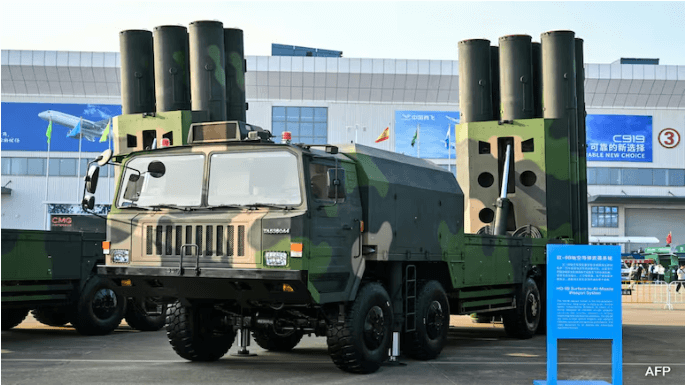
Diving into specifics, the clash marked a milestone: the debut of China’s HQ-9 surface-to-air missiles, PL-15 air-to-air projectiles, and J-10 fighters in real heat. The USCC calls it a “real-world field experiment” for the People’s Liberation Army, with Pakistan reportedly downing three Indian jets—not all Rafales, mind you—using these systems. Post-ceasefire, China dangled a June offer: 40 J-35 stealth fighters, KJ-500 early-warning planes, and ballistic defenses China India-Pak Weapons, all tailored to Islamabad’s wishlist. It’s no coincidence; this came amid joint drills like Warrior-VIII and AMAN, tightening the Sino-Pak knot.
Yet, the report tempers hype: labeling it a “proxy war” overplays Beijing’s hand as puppeteer. Undeniable, with headlines buzzing about Chinese kit giving Pakistan “a new edge China India-Pak Weapons.”
Shadows of Doubt: The Rafale Smear Campaign
Not content with just watching, the USCC accuses China of a sly digital offensive. Fake social accounts flooded feeds with AI-forged “debris” pics—think video game wreckage passed off as crash evidence. It worked: Indonesia paused a Rafale deal mid-stream, swayed by embassy whispers. Mao Ning shot back, calling the commission’s take “disinformation” from an ideologically tilted outfit. Ouch. This ties into broader patterns; for context on tech-fueled info wars, our internal link: guide to modern hybrid threats breaks it down.
Wrapping this up, it’s a stark nudge on how conflicts become classrooms for rivals. As border frictions simmer—India-China patrols in Ladakh haven’t eased—this “test” could reshape arsenals region-wide. What’s your read? Drop thoughts below. (Read time: 3 mins